
Roof Rat Removal in Waco, TX — Rats in the Attic
Hearing scurrying overhead at night? Roof rats are Waco's most common attic invader — providers remove them and seal the roofline they use to get in.
Call (855) 591-1339 — Free InspectionIf the noise is coming from above you — the attic, the ceiling over the bedroom, inside the walls near the roof — the odds are high you have roof rats. They are expert climbers, and Waco’s tree-lined streets give them an easy route from branch to roof to attic.
Why Roof Rats Love Waco Attics
- Tree canopy. Pecans, live oaks and hackberries in older neighborhoods often hang over or touch rooflines. Roof rats run along branches, power lines and fences.
- Food nearby. Pecans, citrus, bird feeders, pet food and fallen fruit give them an easy meal.
- Warm, protected space. Attic insulation is perfect nesting material, and a Waco attic stays dry and sheltered year-round.
- Fall movement. Activity often climbs in late summer and fall as nut crops drop and nights cool down.
Signs of Roof Rats in the Attic
- Fast running, scratching or gnawing overhead, mostly after sunset and before dawn
- Pointed droppings about ½ inch long along attic beams, ducts and insulation
- Trails and tunnels through blown-in insulation
- Grease marks on rafters, at soffit gaps or where branches meet the roof
- Chewed wires, duct wrap or stored boxes in the attic
- Rats seen running along a fence top or power line at dusk
Hearing scratching at night or smelling something dead? Get connected with a local Waco rodent pro today.
Call (855) 591-1339 Free referral call · Ask for a written price before any work
How Providers Remove Roof Rats
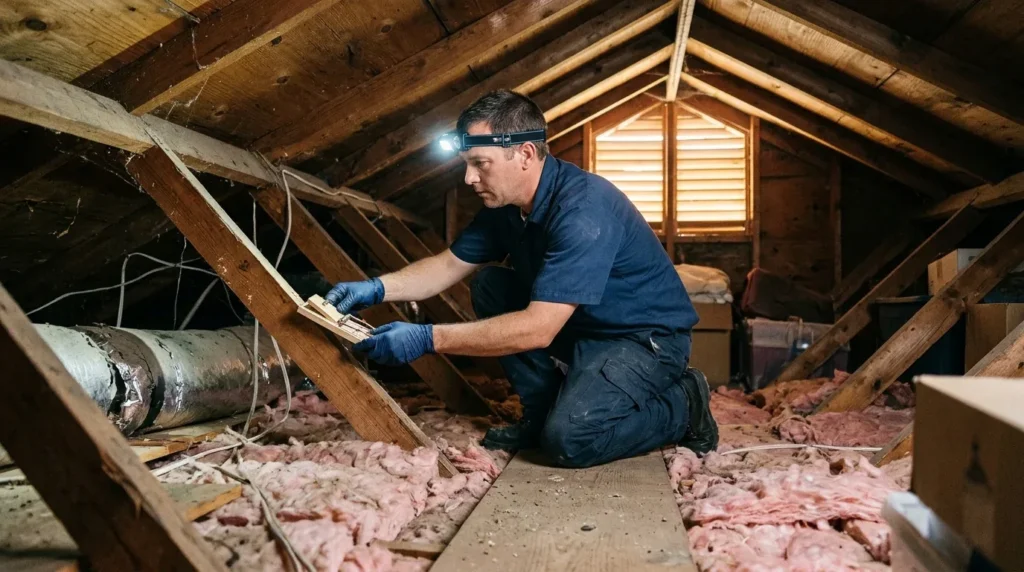
- Attic and roofline inspection — providers find the active runways, nests and every entry point at the roofline, soffits, roof returns, vents and plumbing stacks.
- Attic trapping — traps are set on confirmed runways in the attic, not scattered randomly. Roof rats are cautious, so placement matters more than quantity.
- Tree and access work — providers show you which branches need to be cut back from the roof (providers recommend at least 6–8 feet of clearance).
- Roofline exclusion — once activity drops, providers seal entry points with sheet metal, hardware cloth and stack guards. See rodent exclusion.
- Cleanup — droppings, nests and contaminated insulation removed. See attic cleanup.
- Follow-up — providers check until there is no new activity.
Roof Rats vs. Squirrels in the Attic
Both make noise overhead, but timing helps you tell them apart. Roof rats are active at night. Squirrels are active in the early morning and daytime. Rat droppings are smaller and pointed; squirrel droppings are larger and rounder. If you are not sure, providers identify it during the inspection.
How Much Does Roof Rat Removal Cost in Waco?
The biggest factors are the size of the attic, how many entry points need sealing at the roofline, and whether insulation must be removed and replaced. Two-story homes and steep roofs take more work. You get a written, fixed price after a free inspection. See rodent control cost in Waco.
Other Rodent Services in Waco
Roof rats and Norway rats trapped and sealed out
House mice and deer mice out of walls, kitchens and attics
Every gap sealed with steel, mesh and sheet metal
Droppings, nests and soiled insulation removed
Dead Rat & Dead Animal Removal
Smell located, carcass removed, area deodorized
Pier-and-beam homes sealed and cleaned
Restaurants, warehouses and offices
Rental & Airbnb Rodent Control
Landlords, property managers and short-term hosts
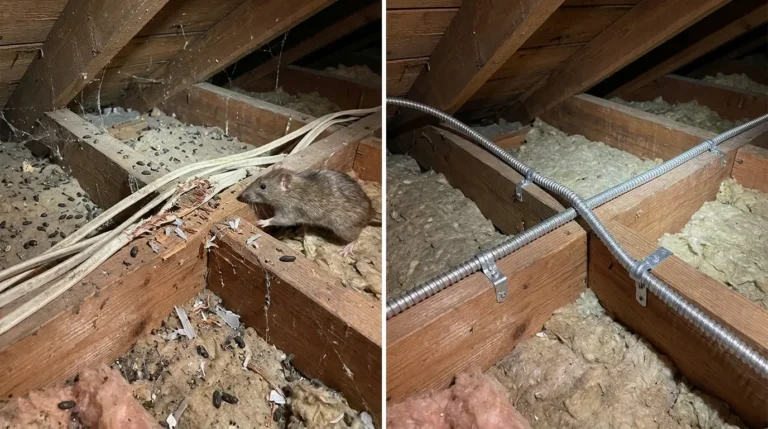
Before & After: Rat-Chewed Attic Wiring
 BeforeAfter
Rat-Chewed Attic Wiring
Rats stripped wire insulation down to copper — a real fire risk. Rats removed, wiring protected in conduit. Rat Removal →
More Questions Waco Homeowners Ask
Why do I hear rats in the attic more in fall and winter?
Roof rats live in trees and dense vegetation during warm months and move into attics as nights cool and outdoor food drops off. Noise is usually loudest at night, shortly after dark and again before dawn.
Do roof rats need trees to get in?
Overhanging branches and utility lines give them a direct route to the roof, so trimming limbs back several feet removes the easiest path. Roof rats can still climb brick, downspouts and siding, which is why sealing the roofline matters most.
FAQ – Roof Rats in Waco
Are roof rats common in Waco?
Yes. Roof rats are one of the most common rodents in Central Texas attics, especially in older neighborhoods with mature trees.
Can roof rats damage my home?
Yes. They chew wiring, flatten and soil insulation, tear duct wrap and contaminate stored items. Chewed wiring is a fire hazard.
Should I put poison in the attic?
Providers strongly advise against it. Rats that eat poison often die in walls or hard-to-reach attic corners, and the smell in a hot Texas attic can be severe.
How do I keep roof rats out after removal?
Seal the roofline, trim branches back from the roof, keep fallen fruit and nuts picked up, and store pet food and bird seed in sealed containers.
Rats in the Attic in Waco
Most rats in Waco attics are roof rats. They climb pecan, live oak and cedar branches onto the roof, then squeeze in at roof returns, soffit gaps, gable vents and where two roof planes meet. Once inside, they nest in the insulation and travel along rafters and the tops of walls, which is why the noise is loudest overhead in the evening and before dawn.
- Look for droppings about 1/2 inch long on the attic floor and along the edges
- Check for rub marks and gnawing on rafters, wiring and duct wrap
- Watch the roofline at dusk for rats running along branches or utility lines
- Look for flattened tunnels through the insulation
Attic rat jobs usually need trapping, roofline sealing and attic cleanup. See why rats come back for the most common reason attic jobs fail.
More guides: rats in the attic guide · how high rats can jump
How Roof Rats Get Into Waco Homes
- Roof-to-wall junctions where a lower roof meets a second-story wall
- Gable and soffit vents with loose or torn screens
- Plumbing vent stacks and gaps around roof penetrations
- A/C line sets and cable entries high on exterior walls
- Gaps in roof decking at the eaves and fascia
- Tree limbs and utility lines that give rats a bridge to the roof
Roof Rat Damage in the Attic
- Electrical wiring. Chewed insulation on wires is the most serious risk because it can cause shorts and fires.
- Insulation. Runways, nests and urine compress and contaminate insulation.
- Ductwork. Rats tear flex duct, which leaks air and can pull odors into the house.
- Eaves and fascia. Gnawing widens entry gaps over time.
Older Neighborhoods and Tree Cover
Roof rats travel through trees and along fences and utility lines, so homes with mature trees close to the roofline see the most activity. That describes many older Waco neighborhoods, such as Sanger Heights and the Baylor area. Trimming limbs back from the roof is one of the most effective long-term fixes.
Related: rats in the attic and how high rats can jump.
Explore Rodent Control in Waco
Services
Waco Neighborhoods
Nearby Cities
Rodent Guides
Ready to get rodents out for good? Get connected with a local Waco rodent pro now.
Call (855) 591-1339 Free referral call · Ask for a written price before any work